


I was tempted to split this newsletter into two parts, with the second part going out on Sunday. But in the spirit of Black Friday promos (huhuhu), you’ll get the entire thing. If this newsletter was forwarded to you, subscribe here for free:
TOGETHER WITH CREDIT DIRECT
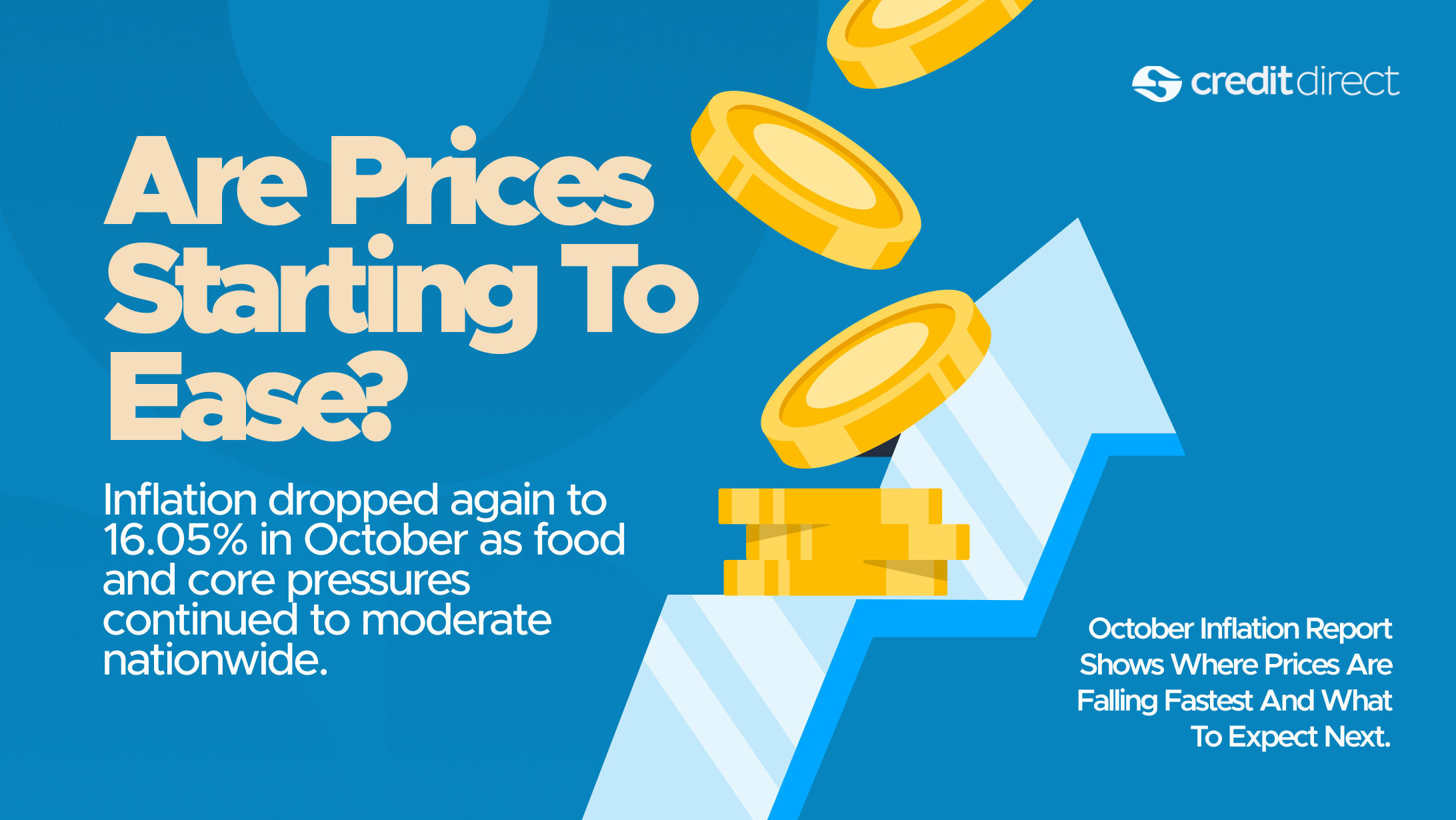
Inflation eased 16.05% in October, raising the question of whether price pressure is finally easing. Food and core prices moderated nationwide, but there is more to understand beneath the headline number.
The October report shows where prices are cooling, the factors driving the shift, and what it could mean for spending as the year wraps up.
A busy week at the CBN
In the early days of Notadeepdive, people signed up for two things: unusually nerdy commentary on Nigerian tech, and an unhealthy obsession with Jumia and Godwin Emefiele. These days, we’re down to one obsession because Emefiele has taken the road less travelled from the governor’s office to the dockyard of the courts.
But soldier go, soldier come, but the barracks will always remain intact. That’s my way of saying that the Central Bank was pretty busy this week. Two moves in particular deserve attention: one aimed at people who write dud cheques, and another aimed at how banks and fintechs sell their products to the public.
Imagine you walk into your favorite store to buy that 120-inch TV you’ve been eyeing for a while. The price is steep, but they also want to make the sale, so they offer you the option of paying in instalments. Sweet.
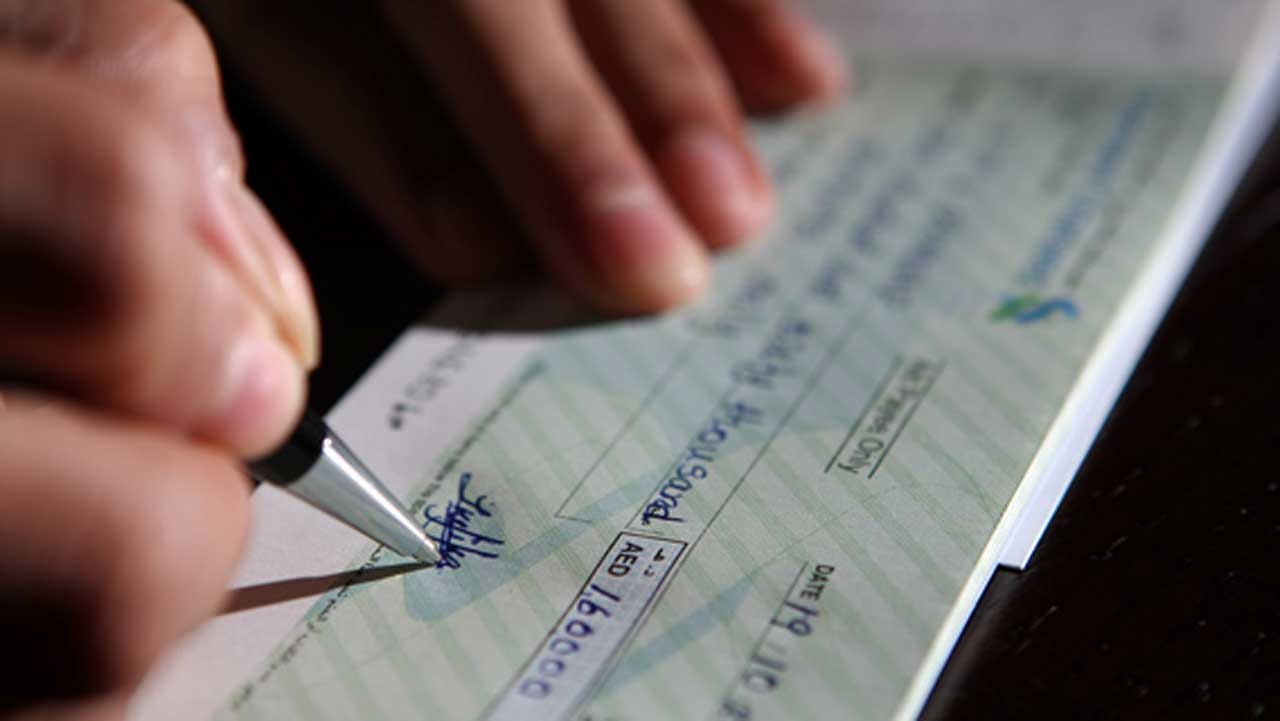
Now all they need from you are a few post-dated cheques. The cheques are a form of security: if you fail to pay as agreed, they will present the cheques. And if those cheques bounce, you would have committed a crime.
Under the Dishonoured Cheques (Offences) Act, issuing a cheque that bounces for lack of funds is a criminal offence punishable by up to two years in prison without the option of a fine for individuals. In theory, this should be a powerful deterrent. In practice, not so much.
Prosecutions are rare because many complainants don’t want to spend months or years in court. Police involvement often leads to informal settlements rather than convictions. And banks seldom escalate cases because they don’t want to lose customers or entangle themselves in legal processes that rarely produce results.
This weak enforcement culture is what the CBN is trying to change with its new draft Guidelines on the Treatment of Dud Cheques, issued by the Financial Policy and Regulation Department (FPRD) under Dr. Rita Ijeoma Sike.
The guidelines propose a simpler system: instead of relying on criminal prosecution, the banking system itself becomes the enforcement mechanism. If you issue three cheques that bounce due to insufficient funds, you can be restricted from the cheque clearing system and barred from accessing credit for five years. That is a clearer penalty than hoping a court case will run its course.
To make this work, banks must report incidents into the Centralised Risk Management System (CRMS) — a CBN database that holds the credit and risk profile of every borrower in the banking system. Once someone is flagged for serial dud cheques, every bank sees it. That makes it difficult to open new current accounts or access loans, no matter your relationship with any individual bank.
In the past, if a big client bounced a cheque, a relationship manager could look the other way, encourage them to “regularise” the account, and move on. Under the new draft, ignoring it exposes the bank to regulatory penalties. That shifts the incentives: banks now have a reason to treat dud cheques as a systemic risk rather than a customer-management issue.
Why is this happening now, when most people haven’t seen a cheque in years? Because cheques are not as dead as they feel. CBN/NIBSS data shows cheque transactions in Q1 2025 were still worth about ₦886.8 billion, up 31 percent year-on-year. They’ve shrunk relative to transfers and POS, but they remain important for contractors, distributors, government payments and a lot of formal B2B transactions. Cheques are now a niche rail, but the value running through that niche is still large.
A few questions that are worth thinking about;
Can the CBN apply this consistently? A small distributor whose cheques bounce thrice will likely feel the full force of this. Will the same happen to a politically connected contractor doing business with a state ministry?
An imperfect system. Sometimes cheques bounce because inward clearing is delayed or a charge hits an account late. A five-year sanction is severe in a system where fixing a BVN typo can take weeks.
Will this actually improve credit culture? If businesses decide cheques are now too dangerous, they’ll still need a way to express “I’ll pay you later.” That can move activity further away from anything visible to regulators.
But for all its flaws, the guideline restores consequences, and if the CBN can make these rules predictable and apply them beyond the usual soft targets, it will close a loophole that has survived for decades.
The CBN’s New Rules for How Banks and Fintechs Talk
We spend a lot of time pointing out that the business of banking is not mysterious. A bank accepts deposits with a simple promise that your money will be available whenever you want it. It then lends part of those deposits at a profit. This basic model is surrounded by layers of protection: capital adequacy requirements, liquidity ratios, loan classification rules, single obligor limits, and a dozen other prudential guardrails designed to keep banks from doing anything too clever with customer funds.
But a fintech’s model can be a bit fuzzier. Say a fintech tells you it can help you “save and earn 25% interest.” Do they have to tell you that they lend that money to high-risk borrowers? Do they have to disclose that the interest rate is possible only because the underlying activity has a sprinkle of unsecured lending?
In 2023, the fintech Float lost billions of naira after using client deposits to execute currency trades, an activity customers did not know was happening and did not consent to.
The point of revisiting that story is that financial products are sometimes sold as one thing and operated as another. Sometimes that mismatch sits with fintechs. Sometimes it sits with the banks.
Think about how banks advertise. The “save and win” campaigns, where a bank asks you to put money away for a chance to win a car or a house. Adverts that say “zero charges” or “no fees,” only for customers to discover the conditions and exceptions that quietly restore the fees. Billboards that describe a bank as “Nigeria’s safest bank” or “Africa’s most trusted bank,” with no explanation of what those claims are based on. None of these is fraud in the Float sense. But they all rely on a gap between the marketing story and the actual risk or experience.
This is the gap the CBN is trying to close with a new circular on advertising, issued by its Compliance Department under Olubunmi Ayodele-Oni. The directive tells banks, payment service banks, and other financial institutions to immediately withdraw adverts and promotional materials that fall short of its consumer-protection and fair-marketing standards.
Institutions are warned against exaggerating benefits, omitting key information, or obscuring risks. Using unaudited financial statements in adverts to make an institution look stronger is no longer a permissible PR practice.
The circular definitely raises the stakes. Institutions must now notify the Compliance Department before running adverts, submit the creative material, identify the target audience and confirm that the underlying product has been approved. They must also file a compliance attestation.
On the surface, this is all straightforward. Describe your products accurately. Don’t promise what you can’t deliver. Don’t dangle lotteries in front of people to drag them into things they don’t understand. But it’s also a shift in how the CBN sees its job.
For years, Nigeria’s regulatory failures have had the same shape: rules exist on paper, but enforcement is slow, selective, or aimed at the least powerful actors. We saw this in the first wave of loan-app crackdowns, where the worst behaviour continued for months through new entities and workarounds.
We’ve seen banks tweak fee structures immediately after “no charges” announcements. This new advertising push could end in perfectly worded circulars with very uneven follow-through.
There is also a political-economy angle. Big banks have the compliance teams, lawyers and brand agencies to adapt quickly. Smaller MFBs, PSBs and fintechs that have relied on noisy marketing to get noticed will find the new regime much harder. If enforcement is not carefully managed, you can easily end up with a two-tier world:
large banks quietly adjusting language and carrying on,
smaller players taking the bulk of the public sanctions.
Still, taken together with the dud-cheque draft regulations, the direction of travel is clear. The CBN is trying to become a behavioural regulator that polices how people use legacy instruments like cheques and how institutions talk about products in the first place.
Whether that works depends on what happens the first few times a big name crosses the line. If all the early examples of “strong enforcement” are small fintechs and obscure microfinance banks, the message to the market will be the same as always. If the rules start to bite the people who buy the biggest billboards and have the most connected boards, then we’ll know something has actually changed.
See you on Sunday!
This was such a good read. As a PR professional, I can't wait to see how the CBN enforces it's new regulations
Sunday is here already. 😛