


If you missed last week’s Notadeepdive, catch up here and here. If this email was forwarded to you, subscribe for free:
TOGETHER WITH CREDIT DIRECT

This term, Credit Direct Checkout is going all the way with you.
Get up to N1,000,000 to purchase iPads, laptops and other school essentials from over 500 merchants.
Moove-ing On
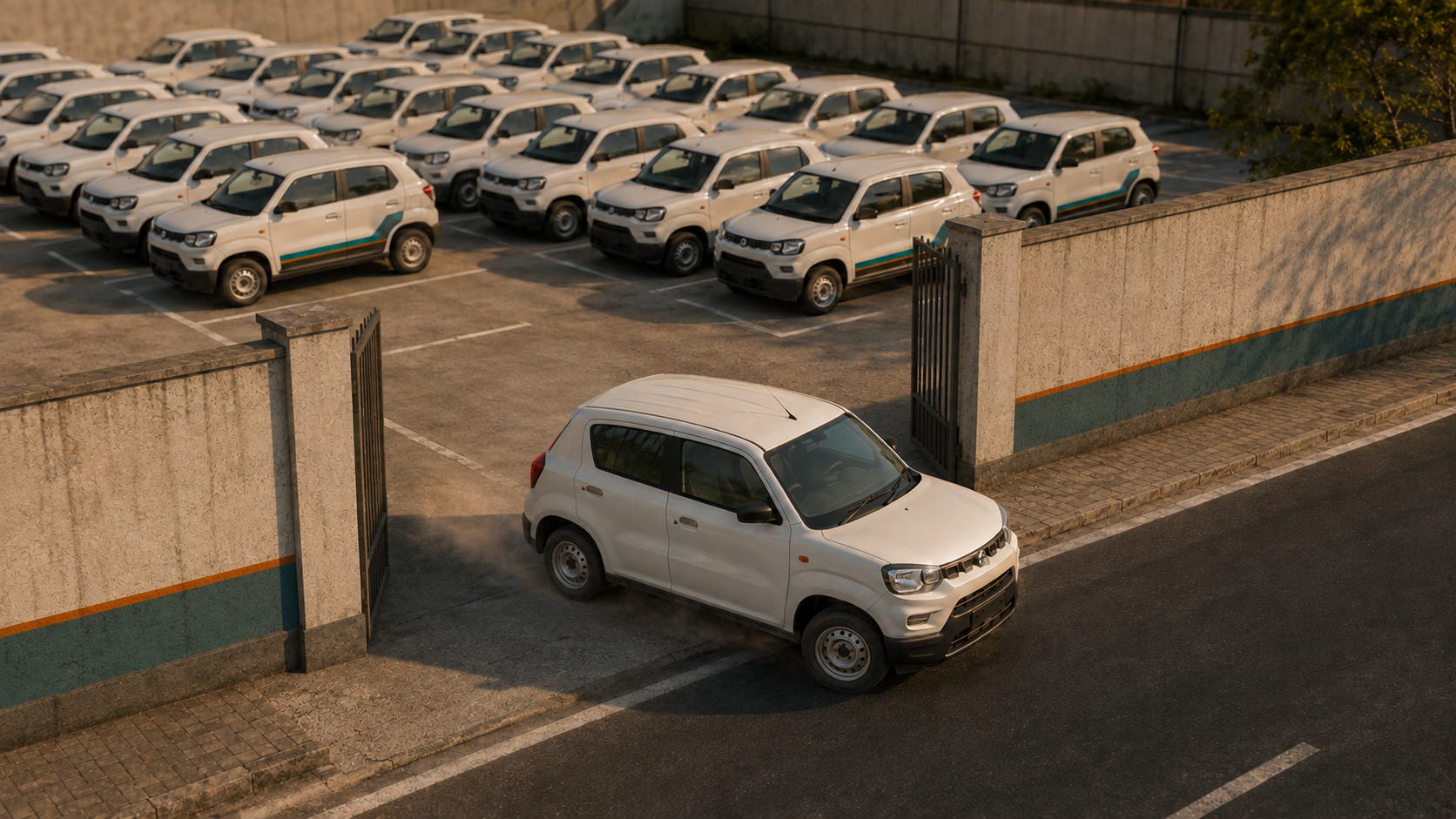
Moove is considering closing its Nigerian business and handing around 3,000 drivers ownership of their cars before they have finished paying for them, two people close to the situation told Notadeepdive.
The options being considered include reducing their outstanding balances to a level that would allow early ownership transfer, or waiving the remaining payments entirely. It is unclear how many of the drivers still have outstanding payments.
Moove did not respond to a request for comments.
The deliberations preceded Uber’s exit from Nigeria this week, those people said. Despite Uber’s abrupt announcement and immediate exit (some riders and drivers learned about the shutdown while trips were still underway), two people with knowledge of the process said the decision to leave was made several weeks ago.
Moove, which became a unicorn last month, financed the now-famous tiny Suzuki cars used by many Uber drivers. It solved an important problem for Uber by adding drivers who could not afford to buy cars.
On Thursday, Technext reported that Moove would allow its drivers to work for Bolt and inDrive.
That could keep the drivers earning while Moove decides whether to wind down the business, but it would not automatically recreate the system behind its arrangement with Uber. Uber’s trip data helped Moove assess and monitor drivers, while its payments integration allowed Moove to collect repayments directly from their earnings.
Without equivalent integrations with Bolt and inDrive, Moove would need another way to collect from thousands of drivers every week. That makes handing over the cars a practical option.
In 2023, TechCabal reported that Moove drivers paid ₦56,604 weekly for four years, amounting to ₦11.77 million in scheduled payments at an annual interest rate of 8.9%.
If all 3,000 drivers have between one and two years remaining and are still on those terms—both large assumptions—a crude calculation puts their outstanding scheduled payments at between ₦8.8 billion and ₦17.7 billion.
The payments also cover insurance, maintenance and other services it would stop providing once ownership transfers, and the contracts have changed over time.
Moove must compare the financing portion of those remaining payments with the cost of continuing to service the cars and collect every week. Its other option is to recover the cars from drivers, store them and find buyers willing to pay enough to make the exercise worthwhile.
When Lagos restricted commercial motorcycles in February 2020, OPay began moving ORide away from passenger trips and towards deliveries. The company reportedly had around 8,000 motorcycles and planned to sell half of them for between ₦180,000 and ₦270,000 each. Individuals and logistics companies quickly began buying them.
Moove faces a harder version of that problem because repossessing and selling thousands of used Suzuki cars would take considerably more time and money. For the drivers, receiving the cars early would be unusually generous, but for Moove, it may be cheaper than collecting everything it is owed.
The company also no longer resembles the vehicle-financing startup that launched in Nigeria. It is valued at $2.1 billion and operates across several markets. It is also building infrastructure for autonomous fleets like Waymo.
Its Nigeria has nevertheless shown the limits of the original model.
When Moove launched, the naira was more stable, and drivers could more easily cover weekly payments and living expenses. As the naira weakened and the cost of cars and fuel rose sharply, drivers’ earnings were declining. Uber could not raise fares indefinitely because its customers were suffering a cost-of-living crisis, yet Moove still needed drivers’ repayments to cover the cost of the cars it had financed.
Moove put thousands of cars on the road for people who could not otherwise afford them and created earning opportunities. But creating work and car ownership turned out to be two different problems.

While Moove considers exiting, Future Africa remains keen on the mobility space. The firm was one of Moove’s early investor, initially putting in a little over $100,000 before investing considerably more, one person with knowledge of the investment said.
It has since sold part of its stake and taken some money off the table, even as it invested in Moove’s latest round through another vehicle. Future Africa is also backing another Nigeria-focused mobility startup that remains in stealth, according to people with knowledge of the situation.
If Moove waives the remaining payments, thousands of drivers will own their cars earlier than expected. It would be a generous outcome for them, but it would also show how badly the economics have deteriorated. What Moove is still owed may no longer be worth the trouble of collecting it.
See you on Sunday!
*An earlier version of this newsletter claimed Future Africa was Moove's first institutional investor. That claim has now been clarified.
It’s interesting that Future Africa is still backing another player in this space. Great for innovation