


If this email was forwarded to you, subscribe here for free:
Ngozi Chukwu, the author of this newsletter edition, will begin publishing “Footnote” on Notadeepdive every Thursday. She’ll write about food delivery, fintech and whatever else captures her imagination. That’s one more reason to subscribe:
TOGETHER WITH CREDIT DIRECT
The answer might surprise you.
The Nigeria Consumer Credit Insights Report breaks down who borrows, how much, for what, and what it reveals about financial behaviour across the country.
The answer to that question is just the beginning.
Restaurant catfishing
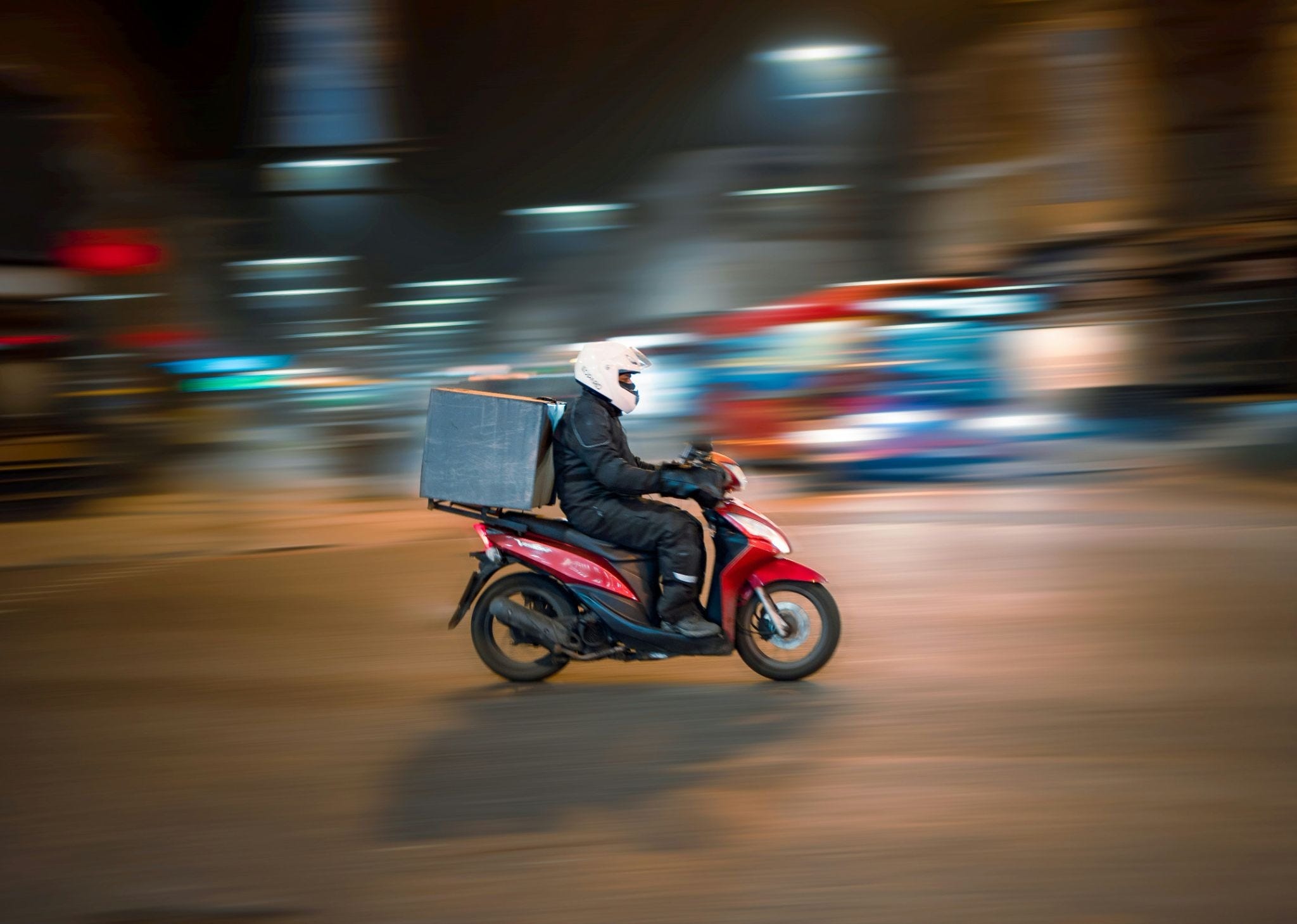
Every time you use a food delivery app like Chowdeck, Glovo, or Swoop, the technology works so well that you don’t have to think about it. You want food, you know the restaurant exists, and you cannot be bothered to leave your chair/bed.
Somewhere in this arrangement is the assumption that the food delivery platform has an active relationship with the restaurant and that the food you receive comes from the restaurant you selected. It’s reinforced every time you walk into that same restaurant and see dispatch riders with their branded t-shirts picking up orders.
That arrangement has recently become a matter of public debate.
Three times in the last six months, Nigerians on social media have experienced collective panic over what can only be described as “restaurant catfishing,” the strange idea that the restaurant you’re ordering from may not be the restaurant.
The first two times, there was an impostor. In December, Corporate Ewa alleged someone had registered its name on Glovo and was buying food from roadside kitchens near Ojuelegba to fill orders, with one customer reporting food poisoning. Glovo delisted the account and promised an investigation.
In May, Techpoint built a fictitious restaurant, registered it on Glovo and Chowdeck, and got an order out the door before either platform flagged it. Both incidents are fraud. Fraud is easy to get upset about, and because it has a villain, the obvious fix is to check who you are onboarding/fix your KYC process.
Norma was the third time, and here, there was no impostor.
On May 28, the Lagos suya spot asked Chowdeck to remove its name, logo, and menu because it had never agreed to be on Chowdeck. How did customers receive orders from a restaurant that hadn’t consented to listing on Chowdeck?
The explanation came this week with Chowdeck clarifying that an agent it calls a shopper stands near popular restaurants, buys the food a customer ordered through the app, and hands it to a rider, no agreement with the restaurant required.
To clear up the confusion, it will now add badges — Verified, Awaiting Verification, Shopper — so you can tell a partner from a shop Chowdeck is merely buying from. Chowdeck framed it as a vulnerability in a system built to support small businesses.
The most obvious question, which many publications have asked (not a bad thing!), is “Is it fair to make a business carry the reputational risk of a listing it never approved?”
But assisted fulfillment, a.k.a. using a shopper, is not really a question of fairness to restaurants because, at face value, the restaurant loses no money.
But money isn’t everything. Restaurants whose items get delivered without their consent have no control over delivery temperature, food handling, or timing. There’s also the reality of customers blaming the restaurant for a bad delivery it never authorized. It’s entirely possible to lose significant brand equity because of a delivery process it has no control over.
Every order Norma didn’t consent to fulfill builds Chowdeck’s ratings and retention. Fast-growing restaurants, like Norma, which launched its fifth location last year, that are worth taking these customers from are exactly the ones with enough pull to refuse to list on Chowdeck.
But assisted fulfilment is cheap customer acquisition for a wannabe super-app because the brand that’s pulling the customer’s attention belongs to someone else. So, the Shopper badge isn’t protection for the restaurant, and it’s not because anyone cares about small businesses. It’s Chowdeck’s claim on a Norma customer that Norma will never meet.
Norma keeps the full counter price of every catfished order because it pays no commission and runs no promotion. A restaurant that actually signs with a food delivery service will pay for the privilege of demand generation.
When Lucky Boy, a Pasadena burger stand, sued Postmates in 2021, it set the commission at roughly 30% of every order.
On a per-order basis, the shopper model is bad: Chowdeck collects no commission, pays a shopper’s time, and floats cash to buy items at full counter price. It only works when you accept that the food is the cost of acquisition and the customer is the asset.
This makes the list of catfished restaurants a proxy for Chowdeck’s leverage. The unconsented restaurants are a map of the supply Chowdeck has demand for but cannot get under contract. While conventional wisdom about delivery apps is that they aggregate demand and restaurants compete to supply it, the Nigerian restaurant market is small enough that the demand sits with the brands, and the food delivery apps end up competing. Case in point, all delivery apps have a rotating cast of deals with Chicken Republic and The Place, suggesting the leverage these big franchises have.
American food delivery startups ran this assisted play on the way up, and the way it played out is a cautionary tale.
In 2015, In-N-Out sued DoorDash for delivering its burgers under an imitation of its logo after being told to stop. Lucky Boy said Postmates posted wrong prices under its name, told customers it was closed when it was open, and steered people searching for Lucky Boy toward restaurants that paid. Grubhub built much of its catalogue this way; the FTC found last year that as many as half its listed restaurants, up to 325,000, were there without consent, that it tended to remove them only when threatened, and that it treated the listing as a lever to sell a partnership. The penalty was $140 million, but Grubhub eventually paid $25 million because that’s all it could afford. Is there a Nigerian In-N-Out with the standing and appetite to sue, or an FCCPC with the appetite to act as the FTC did?
The delivery platforms had compelling incentives to “steal” the customer. DoorDash did not post a profit as a public company until late 2024, and it got there on scale built largely in these grey years of assisted fulfilment. Delivering food is a bad business.
“The economics are tough in this market because the costs are very high and there is plenty of competition, so there is downward pressure on the commissions that we make and upward pressure on marketing costs because everyone is fighting for customers.” - Francis Dufay
Which is why you see a lot of these platforms talk about building super apps. They open dark stores, buy a startup that sells inventory software and hardware, all to one end: owning the relationship with the customer.
You could argue the relationship isn’t worth much yet and that in a market this thin, assisted fulfilment is scrappy catalogue-filling rather than a land grab.
But that objection answers itself. Assisted fulfilment is only worth the legal and reputational exposure to someone who already believes the customer is the prize, which is pretty much the super-app thesis. Chowdeck is wagering that the relationship it is building on Norma’s name will be worth more than the strain of the brand pushing back or going to court.

It’s also dishonest to retroactively publish assisted shopper tags. What’s to stop an exuberant food delivery employee with high targets to start listing assisted shopper restaurants while fulfilling the order from their bedroom.
Growth at all costs needs consumer protection, common sense and duty of care which has been lacking here.
The food delivery apps have to rethink their revenue game. Catfishing restaurants looks smart on their part, but it just opens up issues on other fronts. This is a fantastic and insightful piece.