


If you missed Friday’s Notadeepdive, catch up here. If this email was forwarded to you, subscribe here for free:
TOGETHER WITH CREDIT DIRECT
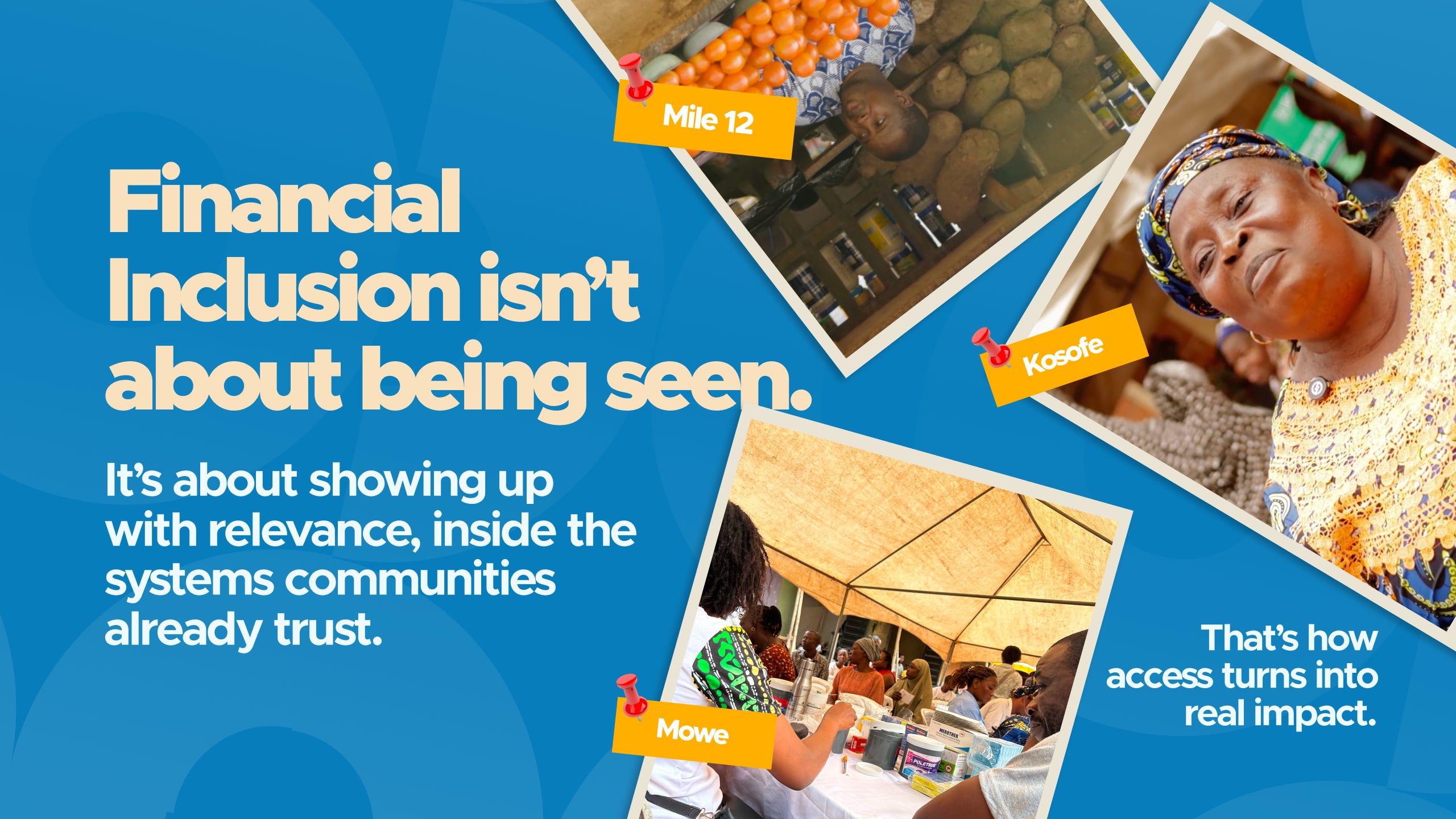
True inclusion is about showing up in the heart of the community, where daily life and commerce actually happen. Credit Direct took this mission to the streets, bringing both financial tools and healthcare directly to over 18 markets across Nigeria.
Thousands of traders gained the support they needed without ever having to leave their stalls or pause their livelihoods. At Credit Direct, we don’t just provide a service, we create impact.
The Stack or Brexit Theory

*Everything here is theoretical, except stated otherwise. Please do not take restructuring advice from a newsletter!
Startups are (theoretically) supposed to be simple. You start a company, raise money, build, grow, and get acquired. Everybody wins.
When you get acquired, you post the customary “It’s still Day 1” speech on LinkedIn.
Your early employees make a couple of hundred thousand dollars and become passionate about hiking in Patagonia. Your early investors write Medium posts about “the power of conviction.”
And then the story ends. That’s the idea.
But what if the acquisition is not the end of the startup? What if it’s the end of one version of the startup?
When you get acquired, you typically get paid in cash or in the acquirer’s stock. Typically, it’s a mix of both because it’s expensive to pay all cash, and stock is how you keep the people you just paid from immediately retiring into a life of lounging at Takwa Bay or taking up hiking full-time.
So founders, early investors, and a bunch of employees get paid largely in the buyer’s shares, swapping their illiquid startup lottery tickets for shares in a much bigger machine. Those shares are (relatively) liquid, and if the buyer is doing well, everyone keeps winning without breaking a sweat.
But let’s throw a spanner in the works as an academic exercise.
What if, over time, the buyer looks at the acquired business and thinks: We need more growth from this thing? We didn’t buy it to become a comfortable utility.
The subsidiary, meanwhile, is now living inside a bigger organism. It has approvals, compliance, risk committees, alignment, and all the other adult supervision that comes with being owned. It means that when the buyer says “grow,” the subsidiary hears: “grow… while staying within the same structure that was designed to stop you from doing risky new things.”
The implied tension is that the buyer wants the upside of startup energy, while the subsidiary wants the safety and distribution of being owned. Everyone wants more growth, but nobody wants the mess that usually produces it.
How do you engineer a win-win situation from all of this?
The Stack or Brex-it Theory (which is completely made up) argues that when a buyer wants more growth from an acquired business, and the acquired business needs more freedom to deliver that growth, they can make a structural compromise.
There are roughly a couple of ways this could work:
The buyer sells down part of its stake to new investors and/or management, resetting incentives and injecting fresh capital. The buyer accepts minority ownership in exchange for cash.
Keep the core of the subsidiary where it is, but build the risky adjacent business verticals in a separate new venture where the buyer holds a minority stake.
The founder/execs give up or sell back part of the acquirer’s shares, then use what’s left to seed a new HoldCo where the acquirer is only a minor owner.
The founders leave to go start something new (Paribus, Instagram, WhatsApp, Slack, Amplifypay, Chaka, Abeg - you get the gist)
If you go with option 3, there are problems to navigate.
Under the HoldCo, employees will have to swap equity in the buyer for equity in a new vehicle with no clear price, no guaranteed liquidity, and a much longer timeline. Oh, to be a fly on the wall in the all-hands team call explaining this to employees.
Valuation yoyo because you now have two competing reference points: the core business (stable, valuable) and the new bets (risky, narrative-heavy).
If we go further down the road, there’s now a need to raise money.
The whole point of this compromise is to pursue a new scope: new products, new markets, maybe regulated adjacencies. That takes capital. And if the acquirer is no longer the obvious default provider of capital (because it’s a minority owner now), then the HoldCo has to go back to the market.
And as we have seen before, everyone loves a returning founder who steps back into the same arena they left.
*Any similarities to existing people and companies are completely coincidental.
See you next week!