


TOGETHER WITH CREDIT DIRECT
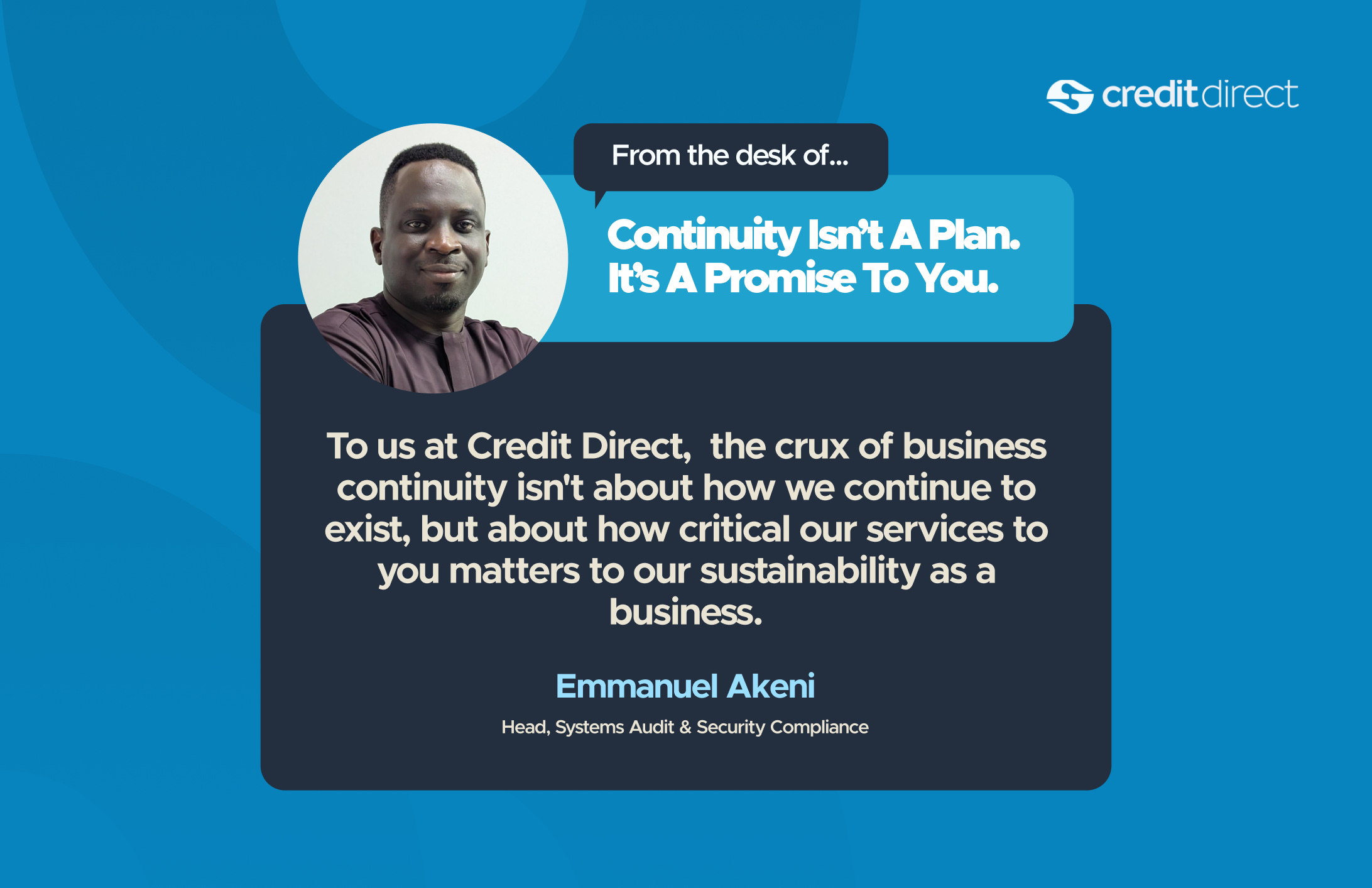
Sustainable business is built on more than processes; it is anchored in the promises we honour. At Credit Direct, every decision is guided by a commitment to be present where it matters most.
Our dedication to continuity is not a strategy, but a responsibility, one woven into every service we deliver. We stand intentionally positioned to support your financial journey today, tomorrow, and at every critical step ahead.
Zap!

Big payments companies often have a small museum of licences: Switching & Processing, Payment Solution Services (PSS), Mobile Money Operators (MMOs).
This alphabet soup blurs the line between what users think a fintech can do and what the regulator knows it’s authorised to do. Sometimes, fintechs deliberately ride the wave of this information asymmetry, launching a product and then hoping to make good with the regulator later.
A different fun twist is that the fintech can also be genuinely uncertain about what it can and can’t do.
But one firm line is that if you want to do anything wallet-shaped—stored value, wallet balances, fund your wallet, tiered limits—you’re no longer in territory of processing transfers land. You’re in the permission class reserved for e-money/wallet operators (MMO-type activity) or actual deposit-takers (microfinance/commercial banks, and other deposit-taking categories). Switching and processing licences are rails, not custody.
When Paystack launched Zap in March 2025, it seemed to know there was a licensing landmine it needed to avoid. The product language was specific. “Today, we’re not targeting the remittance scenario,” CEO Shola Akinlade said. “Our ideal scenario is for people from abroad to come to Nigeria and make transfers using Zap.”
Paystack didn’t want a debate about whether it had an IMTO licence. More importantly, it didn’t want a “you’re running a wallet” debate.
The workaround was to use partner-bank accounts and insist it was only orchestrating movement, not storing money. Paystack’s materials positioned Zap as “a financial platform and not a bank,” with banking services provided by a third party.
Still, some parts of Zap looked suspiciously wallet-adjacent. Some copy tells users to “fund your Zap wallet.” Other parts talk about tiered balance limits. If it walks like a wallet and quacks like a wallet, you don’t get to narrate it into being “just transfers.”
The CBN reportedly looked at the whole arrangement and said nice try, before handing down a ₦250m fine. Big Tech This Week quoted CBN sources saying Zap launched without prior approval and that even “on existing rails,” it still required CBN sign-off.
Now Zap is back, and it feels like the product team did the rebuilding with notes from the regulator. Paystack says it “successfully completed a regulatory review” and Zap now leans hard into trust/compliance cues (deposits held with Fidelity, NDIC insurance) and now has the bells and whistles of a neobank.
It also plugged itself into Paystack Checkout which is smart for distribution.
But these product changes drag Zap into the very Moniepoint/OPay category it tried so hard not to be dragged into.
The Zap incident feels like a microcosm of Cardoso’s incoming “responsible innovation” era: you don’t get to ship a wallet-shaped thing and argue semantics later. The regulator is no longer your late-stage QA step.
Ultimately, we’re back to the question we asked when Zap launched: does Paystack have the consumer muscle (distribution, support, fraud ops, and the daily grind) to make Zap work at scale? We watch.
More Lending is easy
We broadly satirically talk about the idea that lending is extremely easy. First you need a source of cheap money. Then you lend some of that money to people who need it and earn an interest.
For simplicity, we’ll leave out things like prudential guidelines and the fact that the owners of those cheap deposits must also get their monies when they ask for it.
The thing that complicates lending is the simple business of getting the loans back. Typically when we discuss this difficulty, it’s often about retail customers a.k.a. you and I. But corporates can be just as tricky to lend to as individuals. If you’re in doubt, consult Nigeria’s onígbẹ̀sẹ̀ list of the 2000s.
Two weeks ago, Moniepoint’s microfinance went to court seeking an order restraining (practically) every bank from releasing or dealing with funds held Retail Supermarkets Limited (owners of the ShopRite franchise in Nigeria) so it could recover a ₦2.4bn working capital facility owed to it.
There’s no big moral lesson here. Oh wait there is. Lending is easy.
Ending the Year Strong. Thanks Muyiwa. Please i wanted to ask if in the new year you could do us a favour and explain how this fintechs such as Opay / Moneypoint actually earn money and be profitable. Or are they still being subsidized by Tencent, and their Chinese Holding Company and playing at a bigger goal in mind? Just curious on how our own Normal Nigerian Banks can then compete
But Zap is “expensive” and “premium” with their pricing structure. Something Opay and Moniepoint can compete on
And now that they’ve moved settlement banks how can they guarantee the speed Opay and Moniepoint promise?