


The mid-week newsletter is here as promised! If this email was forwarded to you, you can subscribe here for free:
TOGETHER WITH CREDIT DIRECT
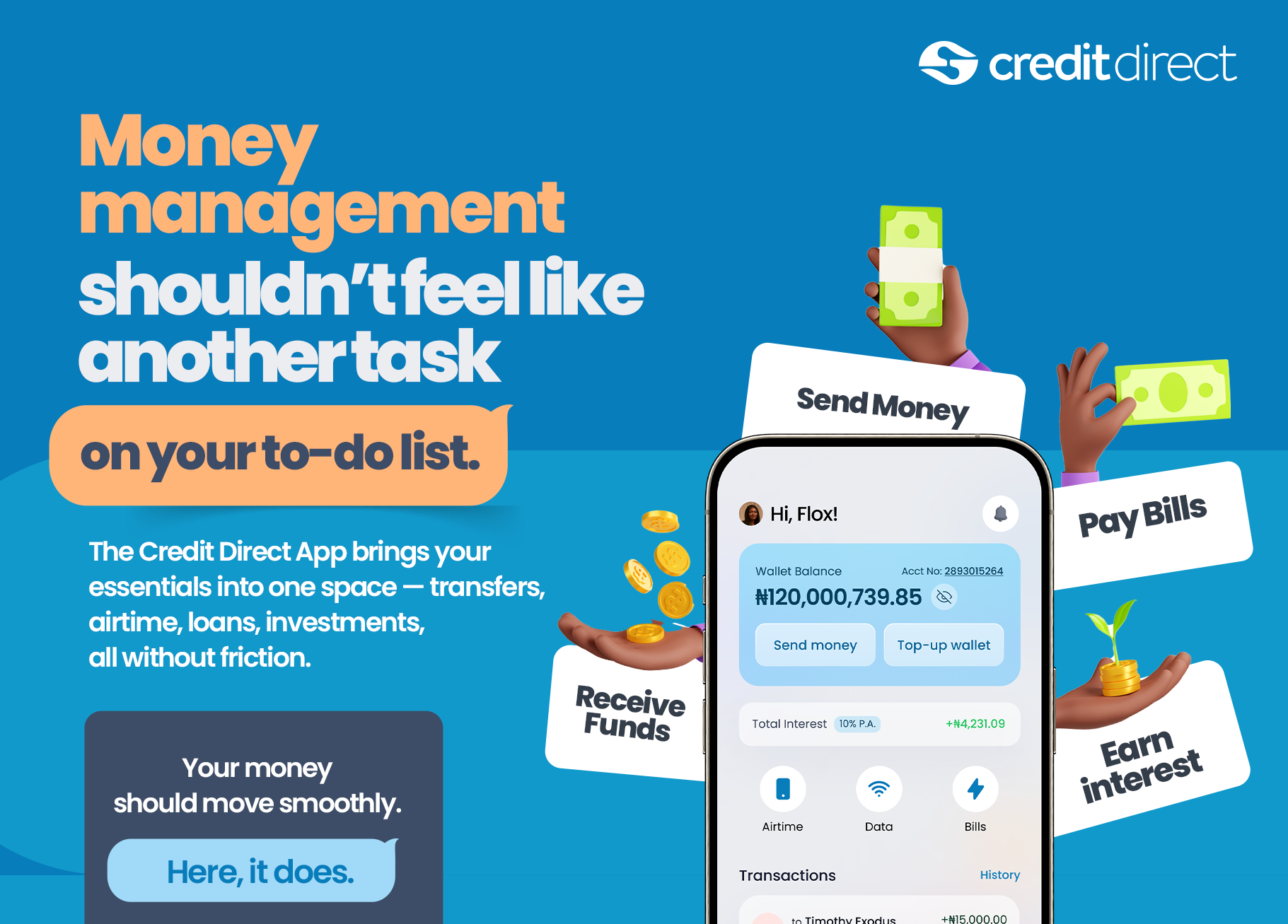
Why hop between five different apps when you can do it all in one? From quick transfers to watching your interest grow, the Credit Direct App is built to fit into your day. Everything you need is right here.
Sometimes buying an MFB is big news

Once Paystack expanded to offline payments in late 2022 and Zap became OPay lite (thanks in no small part to regulatory pushback), it was inevitable that a bank was somewhere in the pipeline.
Not like bank-bank with 200 branches, but a microfinance bank. The kind that allows you hold deposits and lend.
Side note: Do you know how hard it is to get major publications to run “fintech acquires microfinance bank” as serious news? Everyone and their daddy owns an MFB. Which, if you think about it, is exactly the point: being big means everything you do is news.
Anyway, back to the matter at hand. Here’s what I said a few weeks ago when discussing Zap and how it found itself in trouble with the Central Bank:
“One firm line is that if you want to do anything wallet-shaped—stored value, wallet balances, fund your wallet, tiered limits—you’re no longer in territory of processing transfers land. You’re in the permission class reserved for e-money/wallet operators (MMO-type activity) or actual deposit-takers (microfinance/commercial banks, and other deposit-taking categories).”
If Zap was Paystack dipping a toe into B2C, this microfinance bank acquisition is Paystack diving in and making a business strategy out of it.
Most coverage has been factual and positive (nothing wrong with that!) and tends to imply Paystack will make short work of this B2C adventure. But successful companies fail at products all the time. Not because they’re unserious, but because new markets demand new muscles.
Take Flutterwave. They had the talent and the capital, yet their first consumer play, Barter, was famously held together by sellotape and the blood of Jesus before it was eventually shut down. Their more recent consumer effort, Send, required a Wizkid ambassadorship, a stream of freebies, and creative marketing. Even then, they aren’t the market leader in remittances.
To even attempt B2C, Moniepoint had to become a different company, attracting new investors and adopting a new operational DNA. So, our skepticism of Paystack’s ability to pull off this ambition in the murky waters of retail banking is well-founded.
Anyway, on to some of the more interesting bits from their announcement.
They say the newly acquired entity will begin lending to businesses before expanding to consumers. It will also offer banking-as-a-service to companies building financial products, plus treasury management.
If you’re Paystack, you start where you already have distribution: businesses. You already sit in the flow of merchant payments; you already have relationships; you already have reasons to be in the room.
Nnanna’s view: Paystack will not lend up to ₦5 billion come year-end.
While I think ₦5 billion is a doable number, I assume some reasonable anxiety around keeping default rates down will mean they’re not disbursing money with Fairmoney-ish speed.
There’s more:
“Through its payment arm, Paystack already sees merchants’ revenue flows, allowing it to underwrite credit using live data rather than static statements, shortening approval times and tightening risk models.”
I’ve heard every lender from Alausa to Lekki swear their proprietary algorithm/processes lowers risk. I remain cynical until I see hard numbers.
Paystack’s stated ambitions with this consumer play bring to the fore an inevitable dog fight. By aiming to become the “primary bank account for businesses” and mobilizing deposits for cheap lending, Paystack is moving directly onto Moniepoint’s turf.
But these two companies are coming from opposite ends of the universe. Paystack built its empire on the “Blue-chip” web; seamless checkouts for stores, airlines, and tech startups. They are the “suits” of the ecosystem. Moniepoint, after a start in enterprise, was forged in the heat of agency banking. They built their empire on the streets, one POS terminal and one market woman at a time.
That world teaches you things product teams don’t learn from dashboards: downtime realities, physical hardware failures, the power of being physically present, and the very Nigerian truth that support is sometimes a human being showing up.
If Paystack wants to compete in this arena, it will need operational spine because it’s not just competing with Moniepoint but with OPay, PalmPay, and a very long list of players who are already comfortable with the grind.
Nnanna’s view: No one speaks about the human factors of this. The average tenure now at Paystack is four years.
You’re asking people who have spent the last eight years of their careers wearing suits, speaking big English, and feeding fat off Stripe shares to wear branded t-shirts and hawk savings accounts with free transfers?
Ultimately, it’ll be interesting to see if you can succeed in B2C without becoming a different sort of company.
See you on Friday, and good luck to the Super Eagles!
That bit of reality-checking at the end is why I subscribe to your newsletter.
Smart skepticism on the 'proprietary algorithm' claims. Transaction data improves underwriting, but approval speed means nothing without collections discipline and portfolio management. The fintech lending graveyard is full of firms that could say 'yes' in seconds but couldn't collect when payments stopped.
We examine this gap between data-driven lending and credit operations at Trade Credit & Liquidity Management (TCLM) https://tradecredit.substack.com/