


If you missed the midweek newsletter, catch up here. If this newsletter was forwarded to you, subscribe here for free:
TOGETHER WITH CREDIT DIRECT
Why hop between five different apps when you can do it all in one? From quick transfers to watching your interest grow, the Credit Direct App is built to fit into your day. Everything you need is right here.

NGX: High Stakes and Higher Floors
Some days are uneventful. Other days, you get asked by two friends in a WhatsApp group to write a newsletter on “investing in the Nigerian Exchange (NGX) for dummies.”
If you’re a cynic like Nnanna, you’re likely shaking your head. You see the ghosts of retail investors past, burning their fingers by FOMO-ing into an asset class they barely understand.
And to be fair, history suggests that retail exuberance and bad decisions are the financial equivalent of tequila, lime, and salt: a recipe for a massive hangover if not handled in moderation.
For the uninitiated, the 2005–2007 bull run is the ultimate cautionary tale. It was a period of exuberance that ended in generational tears. At the time, market frothiness reached a point where banks were offering customers loans specifically to buy the bank’s own shares.
The numbers tell a brutal story of the subsequent 2009 return to earth:
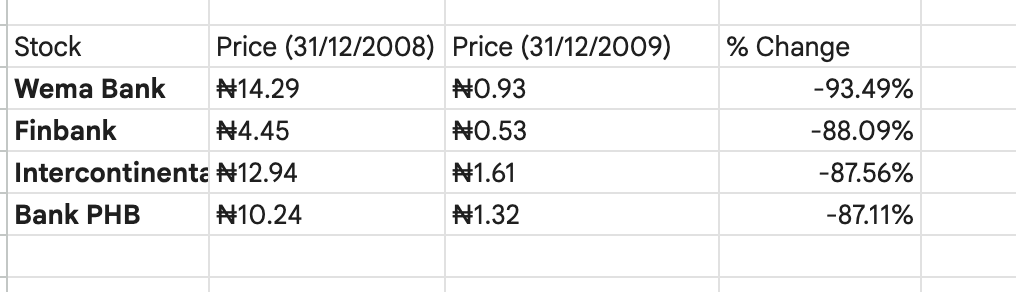
One CBN-linked analysis estimates that the total market capitalisation hit ₦12.9 trillion by March 2008. By December 2009, it had dwindled to ₦5.16 trillion, a 61% decline.
With the reality out of the way that outstanding performance of any asset class often leads to FOMO, let’s move on to the optimistic view.
In 2025, the NGX delivered a world-beating 51.19% return, with market capitalization crossing the historic ₦99 trillion mark.
While domestic investors still do the heavy lifting, the mix is shifting. Foreign Portfolio Investment (FPI) participation, which sat at a measly 8% in mid-2024, surged to over 30% by late 2025 as FX reforms took hold. CSCS now has ~6 million accounts, showing surging retail interest.
The regulator is also moving to ensure the pipes don’t burst under this new liquidity. The Securities and Exchange Commission (SEC) has adjusted the minimum capital requirements for market operators:
Digital Sub-Brokers: ₦10 million → ₦100 million
Broker-Dealers: ₦300 million → ₦2 billion
Fund Managers: ₦150 million → ₦2 billion - ₦5 billion (tiered)
I’ll leave it to the NGX aficionados to debate whether these capital requirements are sufficient.
Side note: If you treat the NGX like a casino, I don’t want any crying if things go sideways.
Even more important note: Nothing here constitutes financial advice. Do your own bloody research!
A note on my drafts on Mono and Okra…
A year into my first stint at TechCabal as a junior reporter, the “API fintech” wave was the equivalent of the 2007 bull run. Okra, the “Plaid of Africa,” and Mono launched to significant excitement; they each both went on to raise over $35 million. Their thesis was simple: financial innovation requires data infrastructure.
The internet tells me I wrote a news article in 2020 which quoted Fara Ashiru Jituboh, Okra’s CEO, as stating:
“Essentially, how far the African fintech sector can grow is intrinsically tied to the success of an infrastructure like Okra and with our core market in Nigeria, we’re opening the door to another level of innovation in Africa’s largest market.”
While many people will put their personal details in the comment section of any social media platform for the promise of 5k, your data is valuable. Banks know where you live, your income, account inflows, and a variety of data touchpoints that tells them a lot more about you than you’d believe.
It’s precisely because of those data points that banks choose not to lend to retail customers, a.k.a you and me. But this is capitalism, and our risk appetites are not created equally. What if more enterprising people wanted to see all that data about you to make lending decisions?
They’d have to integrate with the bank, slog through banking bureaucracy that makes the civil service feel like a rocket ship.
Fintech APIs like Okra and Mono figured they could take on all that stress and then charge businesses for access. While they still found integrating with the banks to be as easy as having your teeth smashed in with a beer mug, they got creative. Screen scraping was one workaround.
Despite the creativity and early promise, it took just two years for players in the space to begin experimenting with new products and testing pivots to other business lines. But there’s a hard truth we’ve learned since: Selling APIs to businesses is only a big business if you have a critical mass of high-volume businesses.
Nnanna’s note:
Ultimately, the decision to sell Mono didn’t wouldn’t have come as a surprise.
This acquisition allows Flutterwave to split their talent. Abdul and the Mono team can lead the “Local Rails” i.e, WhatsApp payments via Owo, Pay-by-Bank, and e-commerce (can we expect a Catalog or Bumpa acquisition next?)
Meanwhile, GB and the core Flutterwave team can stop worrying about local API maintenance and focus on the “Global” stuff: Remittances, Stablecoins, and international treasury.
As always, time will tell what works and what doesn’t.
See you on Sunday!
NGX seems sweet right now. Everyone is recommending buying stocks. I hope it stays that way and this drive for recapitalization promotes stability. Thank you for writing
Okra: Hmmmmm, what could have been
P.S
Awesome write-up by the way