


If you missed last week’s Notadeepdive, catch up here.
And if this newsletter was forwarded to you, subscribe for free here:
TOGETHER WITH CREDIT DIRECT

Few things feel better than seeing your returns come in month after month.
That’s the feeling Yield gives you, with one of the best rates in the market today.
Start with Yield today.
Kitchen in search of work
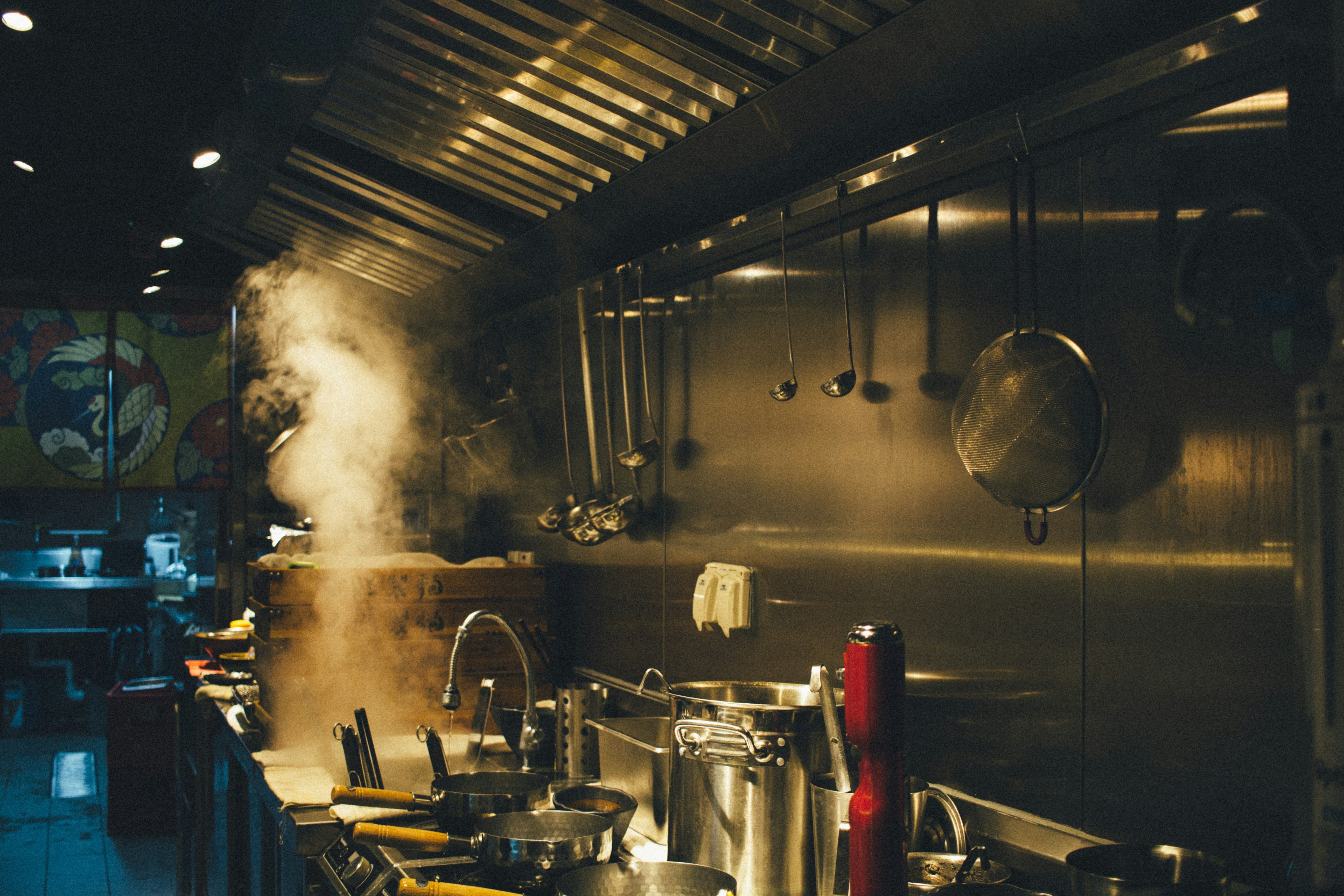
Your favourite restaurant might be two hours away. That is nice to know on an ordinary day and no help at all when you want a hot meal now. So you cook, walk to the buka five minutes from the house, stop at Chicken Republic on the way home, or you open an app and let it bring you the best thing nearby.
Restaurants, delivery apps and cloud kitchens are three answers to the problem of needing good food right away.
A Quick Service Restaurant (QSR) pays for nearness in advance. It takes a site on a busy road, pays rent, puts cooks, freezers, tables and waits for people to walk in and buy good. The rent pays for a kitchen, but it also pays for a place in front of customers. The people walking into the restaurant help cover the staff and equipment before anyone a delivery app brings more customers.
That is the cheapest version of nearness but is still not an easy business. Food Concepts reported revenue of ₦107.5 billion in 2025 and kept about ₦7.2 billion after tax which is 6.6 kobo for every naira of revenue. And that’s with almost 300 outlets, a large procurement operation, and all the walk-in demand its locations can generate.
The delivery app does not need to rent a kitchen or buy ingredients. It aggregates restaurants near you, displays them on one screen, and delivers. The restaurant keeps the food margin, the rider gets paid for the trip, and the app takes a commission and service fee. From its share of the transaction, it pays for refunds, support, and technology. DoorDash completed 903 million orders worth $29.7 billion in the last quarter of 2025 and reported $213 million in profit.
A cloud kitchen’s goal is to escape the constraints of the first two models. It takes the expensive outlet on a busy road out of the equation, along with the dining room and front-of-house staff.
Instead, it rents one central kitchen from which it sells a bevy of food brands. Asian food, Nigerian breakfast options, spicy lunch…you get the picture. It uses the same rent, cold room, prep team, and equipment to serve customers these options.
That is FoodCourt’s model. In 2024, it had about 15 brands in two Lagos kitchens. It said it handled 30,000 orders a month, at an average order value of ₦15,000.
A family could order Chinese food, native dishes and burgers in one basket. A customer who did not want noodles could order jollof. Someone who did not want either could order shawarma. Diverse brands gave FoodCourt more chances to turn roughly the same inputs into more orders.
That model works when there are enough orders to begin with. A kitchen’s costs are roughly the same whether it makes 500 meals a day or 50. An army of brands does not automatically make a kitchen busy.
FoodCourt never published how its 30,000 monthly orders were split between its two locations. If we assume an equal spread, the kitchens were doing about 15,000 orders each month, or roughly 500 a day.
Then it set out to grow with by expanding to Abuja, and a plan for smaller locations reaching deeper Lagos neighbourhoods, with the central kitchens as hubs. Each new kitchen is its own bet on the demand around it.
An Abuja kitchen cannot use a busy evening in Lekki to pay its cooks. A third Lagos kitchen cannot use an order from Gbagada to keep its lights on. Each kitchen needs enough people inside a workable delivery radius, ordering often enough to costs.
FoodCourt would have needed another 15,000 monthly orders just to keep three kitchens working at the same average level as two. It’s unclear whether it found those orders.
The cloud model saves money by concentrating production but a growth plan requires spreading production out.
What we know is that two former employees told TechCabal that growth did not keep pace with the cost of the second Lagos site and Abuja. FoodCourt’s chief executive, Henry Nneji, said the company had believed the Abuja launch would strengthen its long-term position, but that circumstances evolved differently than expected.
The startup couldn’t wait around for diners to walk in so it would have relied on its app. It also listed some brands on Chowdeck for visibility and ran corporate meal services. It made bread, juices and sauces for retailers. It made food for other businesses and even experimented with grocery delivery.
A kitchen that has rent, ovens, cold storage, prep staff and inventory cannot sit idle between lunch and dinner. Corporate meals can fill lunch. Chowdeck can bring customers FoodCourt’s app does not reach. Retail can keep a bakery working. Contract manufacturing can turn spare capacity into someone else’s product.
At a certain point, FoodCourt was a kitchen looking for work.
The cloud kitchen removes the dining room, but it also removes the walk-in customer who helps pay for the kitchen while delivery demand is still growing. FoodCourt had to create that demand itself, then keep finding more of it each time it added another site.
The app gives FoodCourt the full food margin, but it has to acquire the customer. Chowdeck brings visibility, but takes a commission from the business FoodCourt was built to keep. Corporate meals, retail and contract manufacturing can make a kitchen work harder, but they also turn the company into a caterer, retailer and manufacturer alongside its original job as a restaurant and delivery business.
FoodCourt had said it was profitable in 2024 just after it rebuilt parts of its operation. It got larger equipment, pre-prepped ingredients, a push to get meal preparation down to 20 minutes, and made nearly 100 people redundant after it said it had identified theft, wastage and underpricing.
A company can be profitable while raising money to expand so no questions there. A company can also be profitable at one kitchen location and still be unable to finance the next one from its cash pile.
Food Concepts has the scale FoodCourt hoped to achieve with a dense store network, big procurement volumes and customers already walking through the door. Even then, there is not much room in the business for a new location to open badly, for a kitchen to sit underused, or for costs to rise faster than orders.
TechCabal reports that salaries were delayed across FoodCourt’s three branches and Nneji told staff that a funding facility in its final stages had taken longer than expected.
We do not know the size of the facility, who was providing it or whether it was meant to fund expansion, unpaid operating bills or both. FoodCourt is a private company so we may never get answers to those questions.
But taken together, we can piece together from public record a coherent theory for what happened here.
FoodCourt had built more kitchen capacity which it then tried to fill that capacity through direct delivery, aggregators, corporate meals, retail and contract manufacturing. The new locations did not grow quickly enough to cover their added costs, putting a business with thin enough margins on skates.
See you on Sunday!
Is food court model wrong ?
Awesome as always. I also think their original customer base ie the suit-wearing, rave-going, and work-from-home segment haven’t expanded or been as resilient to bear higher prices.