


If you missed last week’s Notadeepdive, catch up here and here.
TOGETHER WITH CREDIT DIRECT
The iPhone 18 Pro is here!🤩
Get yours with a minimum 25% down payment through Credit Direct Checkout at any iStore nationwide.
Check Your Credit Limit to plan your purchase better
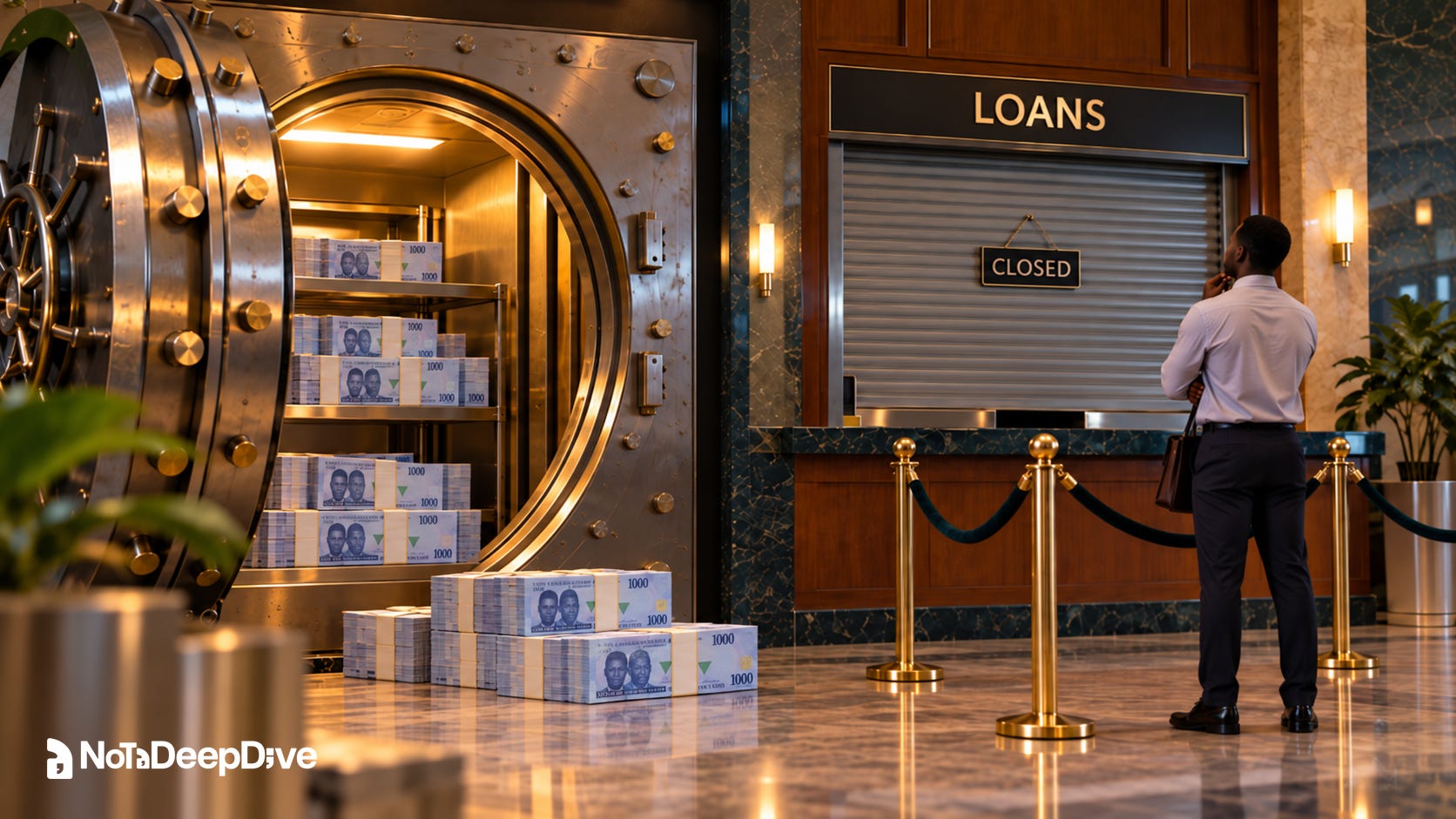
Around here, I often say lending is easy. Once you lay your hands on some cheap funding, you can call TechCabal and brag about how AI drives your lending decisions and underwriting.
You won’t need ads because your subprime borrowers will sniff you out on launch day.
But before you can lend anyone ₦100, somebody has to give you ₦100. Who you get ₦100 from, what they charge, and how quickly they want it back will shape everything you do as a lender.
A bank can get money from equity, borrowing, or deposits. Equity is expensive because shareholders expect a return/dividends, etc. Borrowing (interbank money, bonds, swaps and the like) is priced close to market rates and can be hard to access when everybody gets nervous.
Deposits are the good stuff.
Current accounts hold the money companies need for salaries and suppliers. The money you and I need to survive until the next salary alert usually sits in a savings account and pays interest, though not enough to make you rich.
Term deposits, a.k.a. fixed deposits, are different. Once you ask a customer to tie their money down with you, you are competing with treasury bills, money-market funds and Credit Direct’s Yield offering.
So for banks, the ideal customer is the one who leaves enormous amounts of money sitting around while asking for very little in return.
Nigerian banks know how to find these people, and even then, GTCO is a different animal. Customer deposits fund 76.2% of its balance sheet, and current and savings accounts make up 81.7% of those deposits; term deposits are just 18.3%.
That it keeps attracting deposits even as competition has intensified from banks and a range of fintechs is impressive. GTCO’s interest expense came in at ₦223.8 billion for the half, roughly 3% of its average deposit base, annualized.
The better borrower
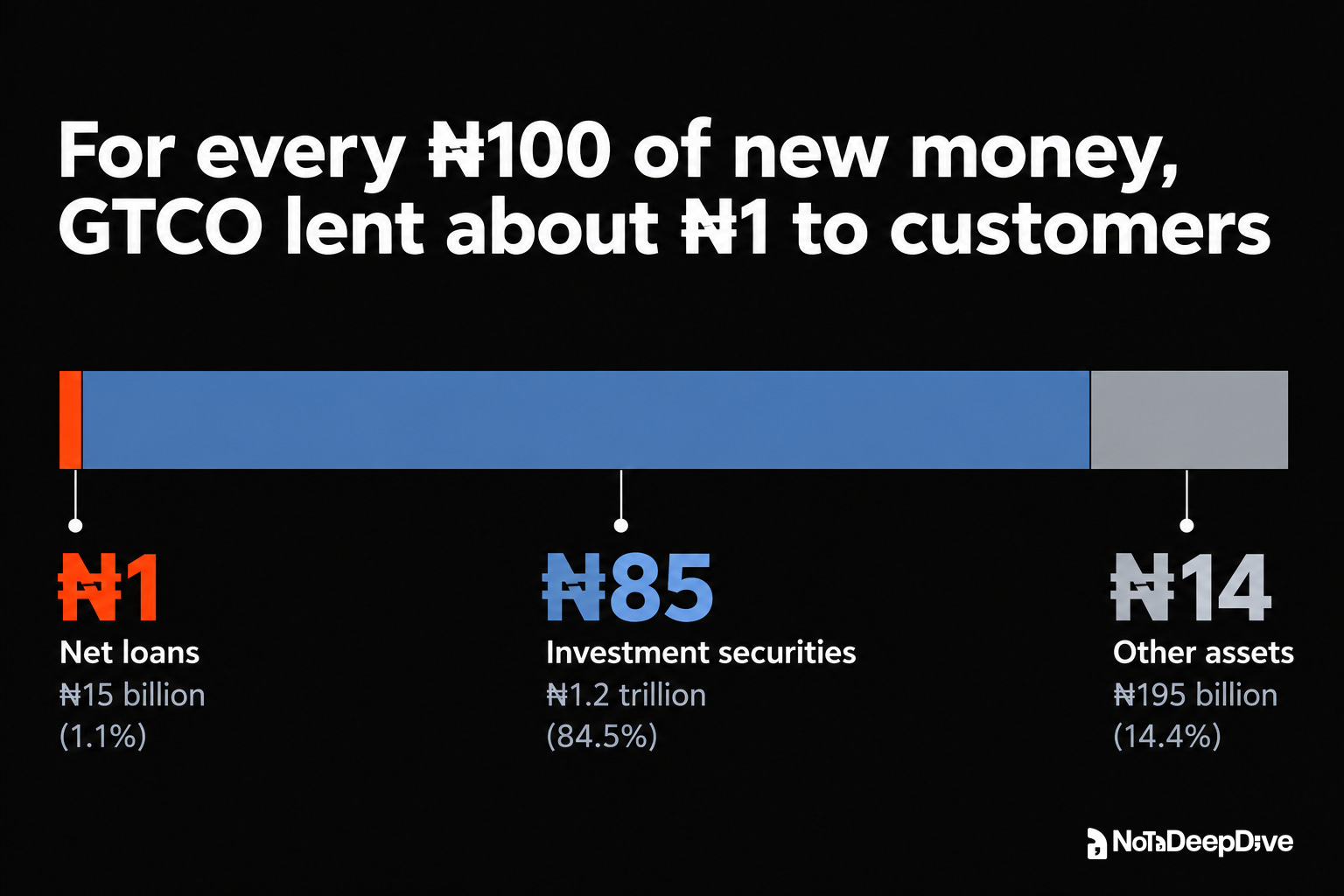
In the first half of 2026, customer deposits increased by ₦1.42 trillion, while net loans grew by ₦20 billion. Investment securities, on the other hand, grew by more than ₦1.2 trillion in what GTCO called the “continued deployment of the expanded funding base.”Cheap funding is only valuable if you have somewhere profitable to put it, which in GTCO’s case, is buying government securities.
Government securities (zero risk) generated ₦382.9 billion of revenue in the first half while loans (risky!) generated ₦347.9 billion.
But don’t write off loans just yet. The ₦347.9 billion in revenue those loans brought in was on an average loan book of about ₦3.14 trillion, which works out to a return of roughly 22% a year, compared to the 21% on a one-year treasury bill at the end of June. Lending isn’t a bad business for GTCO; it’s just a small one.
Nubank, the Latin American digital bank, has the opposite problem. It pays depositors about 12% a year, and government paper pays about 14%; that two percent spread won’t cover costs and deliver a profit, so Nubank does a lot of lending.
GTCO pays roughly 3% on its deposits, so even after the CBN holds back a large share as cash reserves, the government pays it about 19% on the rest; it’s making a fortune not lending.
So when people predict that falling yields (the CBN cut its policy rate sharply in September) will force GTCO to lend more, you have to see if history supports that prediction. The Orange bank has told investors it will grow loans by 25% this year; after a first half in which the loan book barely moved, meeting that target will mean lending about fifty times as much in the second half as it added in the first. I will not be holding my breath.
In 2020, when treasury bills paid almost nothing, and the CBN was trying to force banks to lend out 65% of their deposits, GTCO ended the year lending out a smaller share of its deposits than in 2019, and it lends a smaller share still today.
And while GTBank launched QuickCredit, a digital loan for salary earners and the self-employed, in 2019, it has kept the product small. Its pragmatism has flown in the face of fintechs ramping up lending to anyone in sight.
If you argue that GTCO can, on the evidence of companies like Credit Direct, Fairmoney and OPay, make its retail lending larger, the bank will remind you that caution has always served it well.
In 2009, the CBN sacked the chief executives of eight banks after margin loans and bad debts ate through their capital, and GTBank was not one of them.
GTCO can lend, but it chooses not to because that’s the rational decision given Nigeria’s macroeconomic condition, so the question is how long the bank can keep choosing not to lend.
If GTCO’s customers keep their deposits with the bank (not even the debacle that was their 2024 migration to Finacle made them lose customers), then the bank doesn’t have to really care about lending. The fintechs that are lending use said lending as a strategy to eventually get cheap deposits.
When OPay and PalmPay launched, they targeted customers the banks were indifferent about; people who dealt mostly in cash and would not fill a six-page account-opening form. If you looked only at revenue per customer, you could reasonably wonder what the fintechs were smoking.
But Nigeria had a cash scarcity in 2023; bank apps struggled with the load while OPay, PalmPay and Moniepoint mostly kept working. PalmPay tripled its users in about a year.
While people moved their payments to these apps, they didn’t immediately move their savings. One bread seller told Semafor she took payments into OPay because they arrived instantly, then moved the balance to GTBank every evening because that was where she felt safe keeping it. But that habit is weakening.
Agusto says fintech-led microfinance banks, including OPay, PalmPay and Moniepoint, are now gathering substantial merchant settlement balances at low cost. So more traders are leaving their takings in the app overnight, and loans will speed this up.
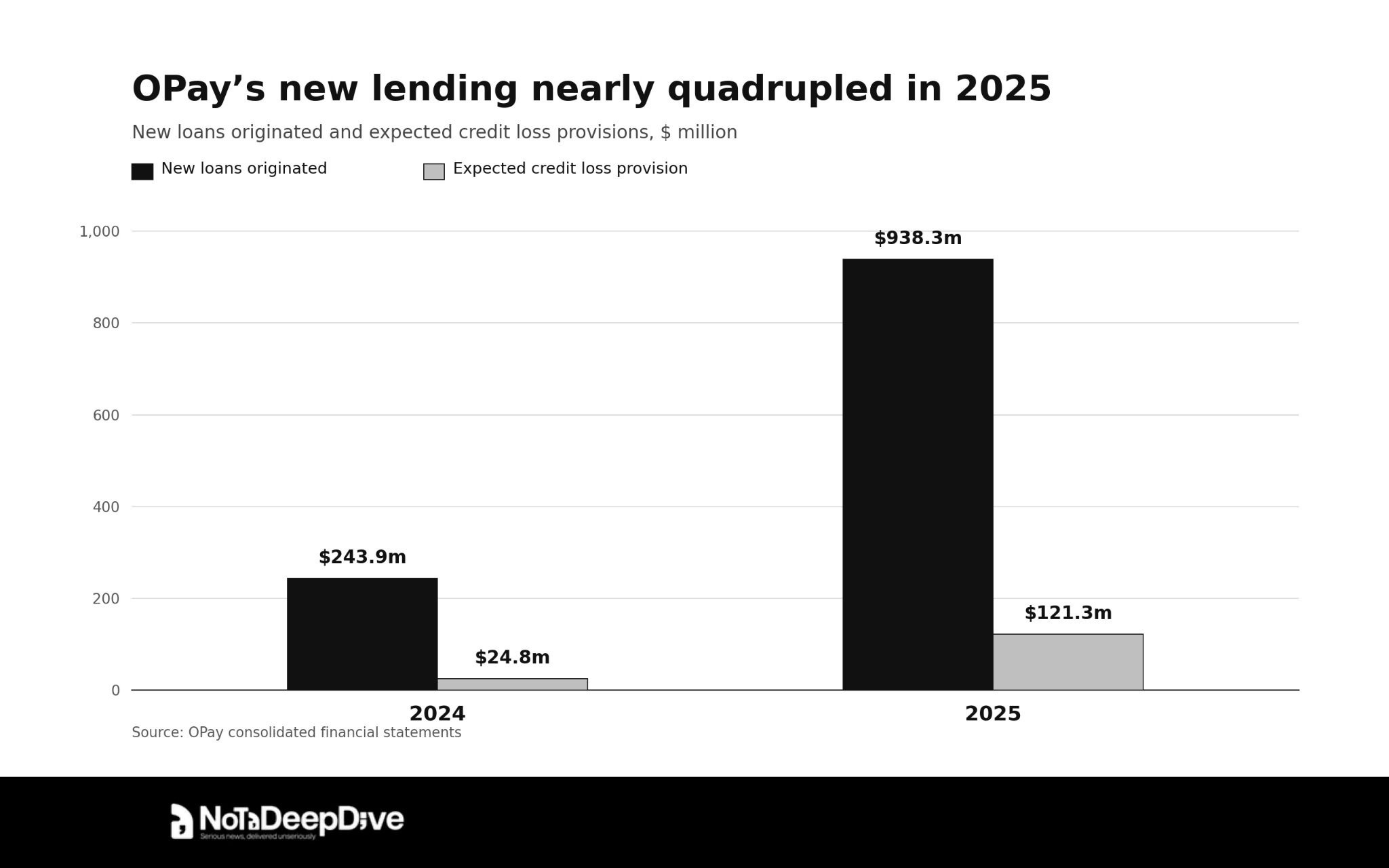
Credit also pulls deposits because lenders like OPay set limits based on how much passes through your account, how often, and how much stays there. A trader who wants a bigger limit has every reason to leave her takings in OPay instead of sweeping them to GTBank at night. Banks have always worked this way; QuickCredit is underwritten on the salary in your GTBank account.
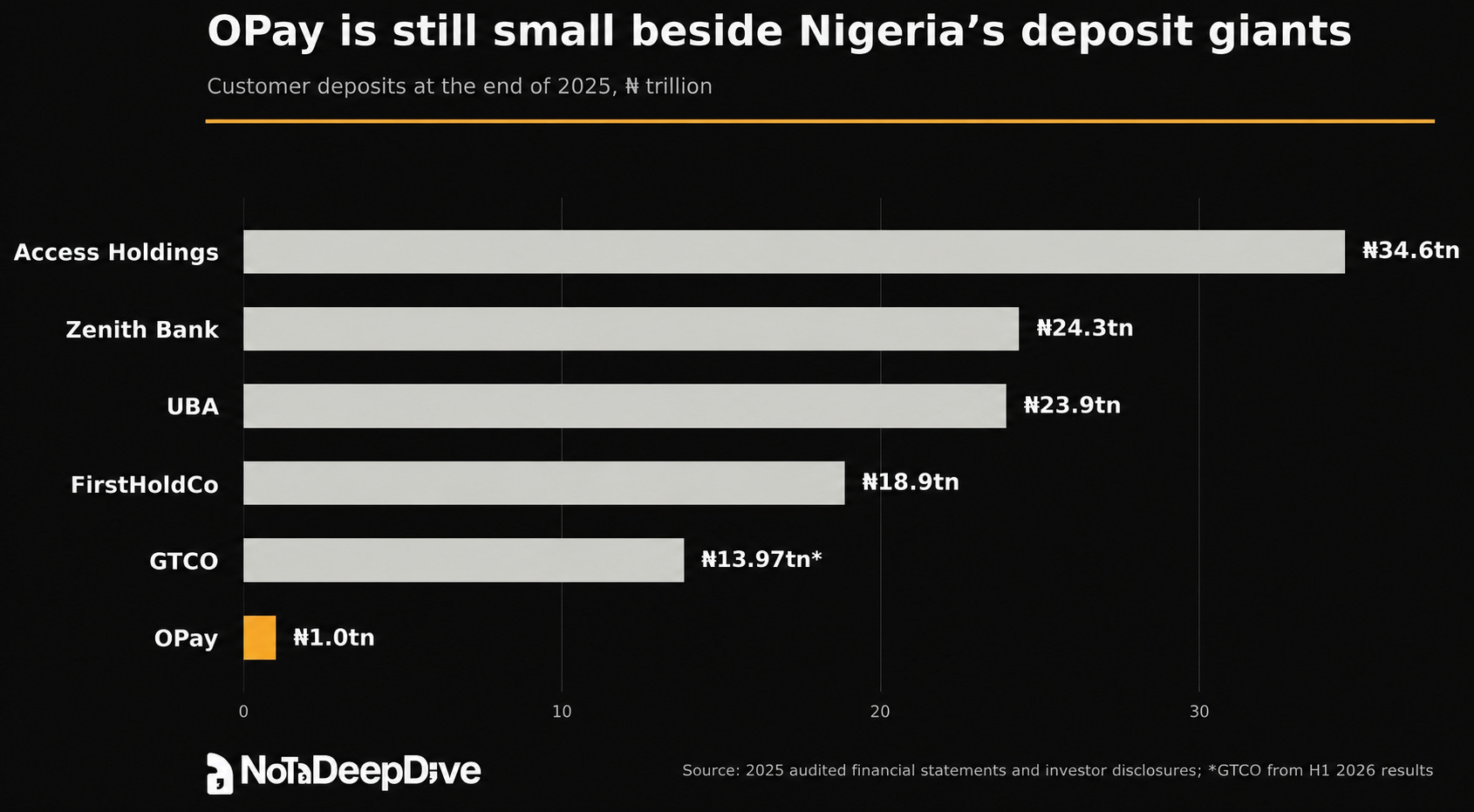
OPay lent nearly four times as much last year as in 2024, to 4.6 million borrowers a quarter, set aside about an eighth of it for loans that might not come back, and still made money.
Through that expensive process, it knows how a trader in Oshodi repays a ₦50,000 loan because it has lent to millions of traders and lost money on some of them. GTCO’s record on small borrowers is thin, and the only way to thicken it is to lend to them and take the losses.
GTCO will say it can catch up whenever it chooses. In payments, HabariPay made ₦7.8 billion in profit; payments reward scale and infrastructure, which a rich parent can buy. But credit knowledge can’t be acquired; it can only be earned through doing.
Ultimately, it doesn’t even matter because this whole thing is about winning deposits. The fintechs aren’t really trying to out-lend the Orange Bank if they can help it. They’re trying to win deposits, one loan limit at a time.
*Notadeepdive will take a break for the rest of October, as is our custom. Africa Built, our joint podcast with Fintech is easy, will run as usual. See you in November!
Capital makes it starker. FGN securities carry a zero risk weight, so the bill at 21% needs no capital behind it while the loan at 22% does. Hard to blame GTCO for picking the bill.